The speakeasy is one of the most enjoyable themes to plan because it has a built-in sense of mischief. In the 1920s these were hidden bars where people gathered to drink, dance and hear the newest jazz while pretending to be somewhere else entirely. Recreating that feel at a company party or private celebration is less about spending heavily on decor and more about getting a few key things right: the setting, the sound, the drinks and the people who bring the era to life. Here is how to approach each one.
Key takeaways
- Pick a venue that already has the right character, or a plain space you can dress with a strong lighting and decor plan.
- Build the music in stages, from crooners and jazz at dinner to a covers band or DJ for the dance floor.
- Use roaming characters and short showpiece acts to give guests the feeling of stepping into a secret club.
Find a room with secrets
You have two routes. The first is a venue that already looks the part: a basement bar, a club with dark wood and velvet booths, or a room with art deco detail. This saves money on decor and lets the space do much of the work. The second is a blank function room transformed by a theming company with drapes, period furniture, low lighting and a statement bar.
Either way, think about the entrance. A speakeasy should feel hidden. A doorman asking for a password, a curtained doorway or a bookcase that opens onto the party all set the mood before guests have a drink in hand. Print the password on the invitation for a small piece of fun that starts the theme early.
Tip from our team: Low, warm lighting does more for a speakeasy look than almost any prop. Ask your production team for amber tones and candlelight effects rather than bright white.
Get the sound of the era right
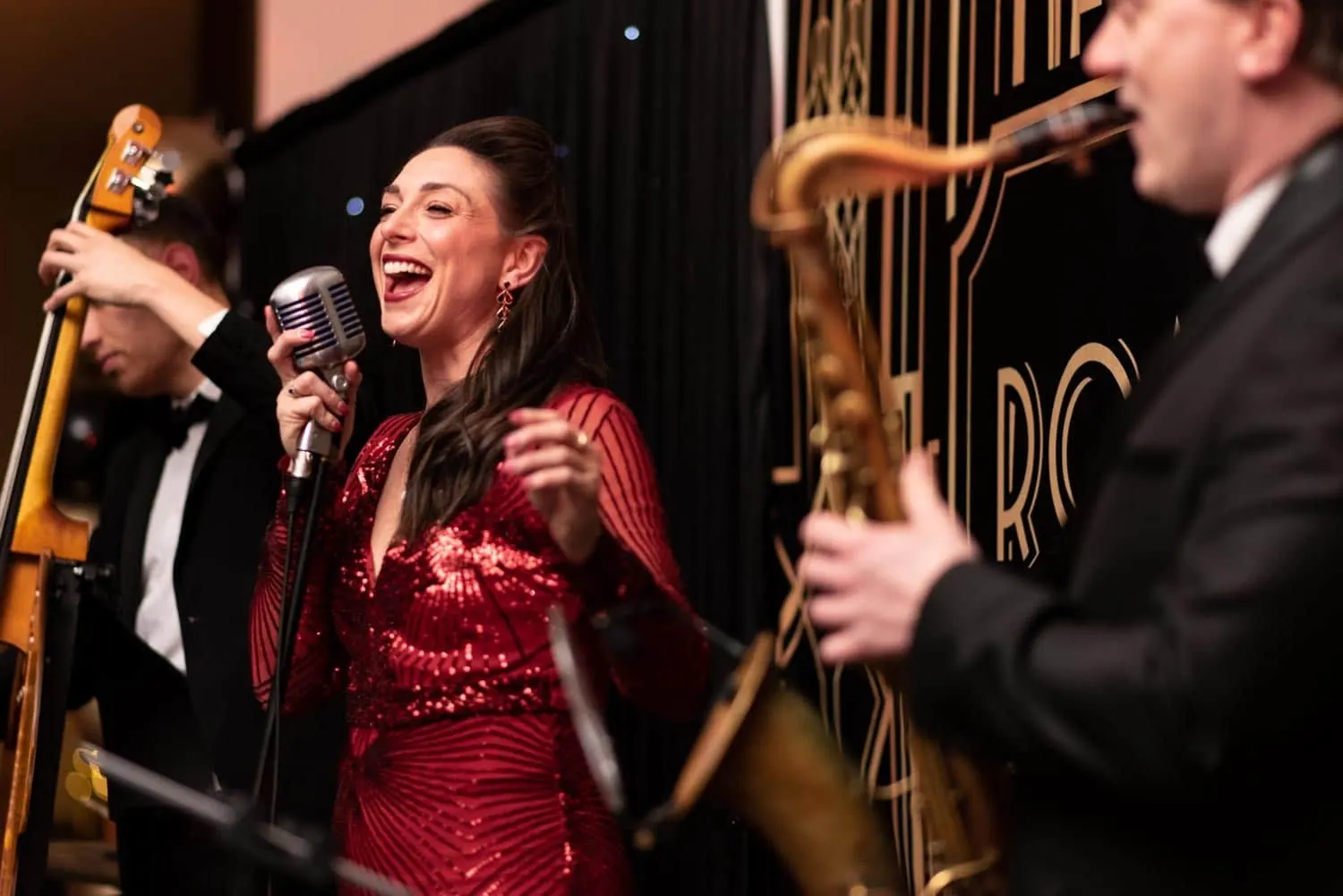
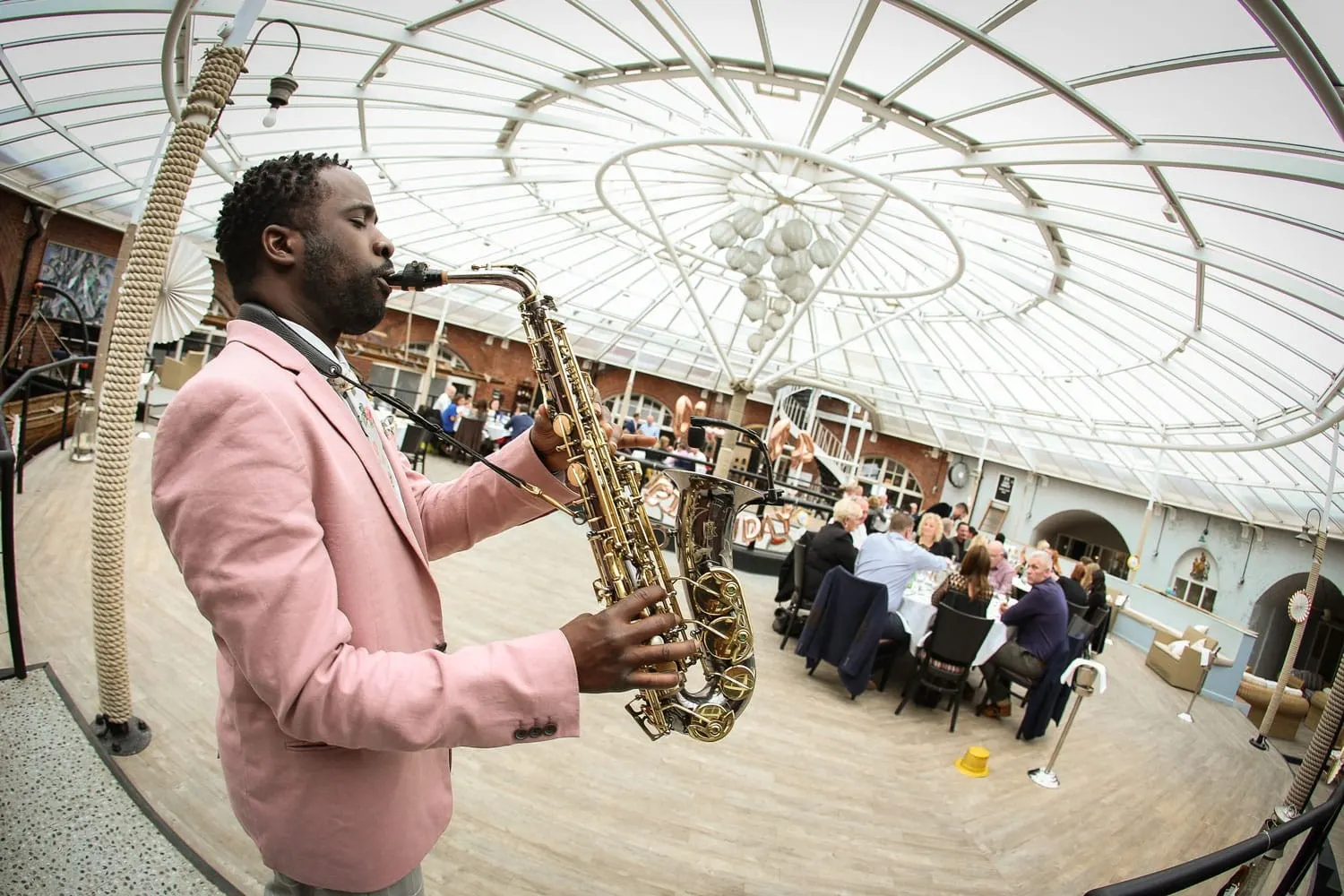
Music from the 1920s and 1930s is rich and varied, so there is plenty to choose from. A jazz singer with a pianist suits an intimate drinks reception. A swing band or small jazz ensemble brings more energy for a larger room. Close harmony trios add a vintage polish, and a crooner can carry the classic standards through dinner. A vintage-style saxophonist roaming among guests works well during arrival.
Most speakeasy parties still end with a modern dance floor, and that is fine. A sensible plan is period music through the reception and dinner, then a commercial covers band or DJ once the formal part is over. Some bands can play modern hits in a swing style, which bridges the two nicely.
Serve drinks with a twist
Food should feel as glamorous as the setting. Canapes and small plates suit a standing reception, while a seated dinner gives you the chance to style tables with art deco place settings and feathers.
Drinks are where a speakeasy really shines. Serve cocktails in teacups as a nod to the days when alcohol had to be disguised. Book flair bartenders who juggle bottles and shakers as part of the service, or a molecular mixology bar with smoking glasses and edible garnishes for a modern take on period drinks. An ice luge carved with an art deco motif adds a talking point at the bar.
Bring the club to life with characters and acts
The difference between a themed room and a themed party is the people moving through it. These acts work especially well:
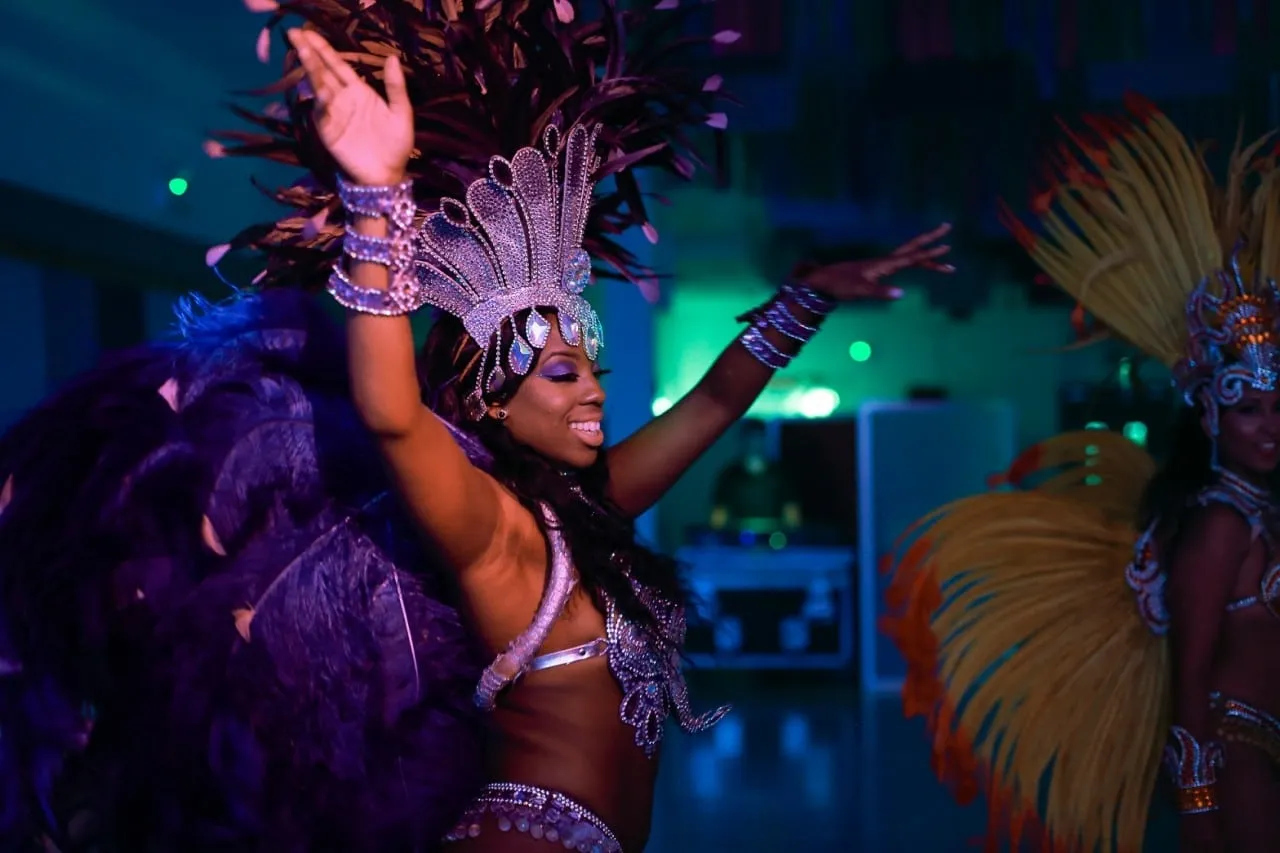
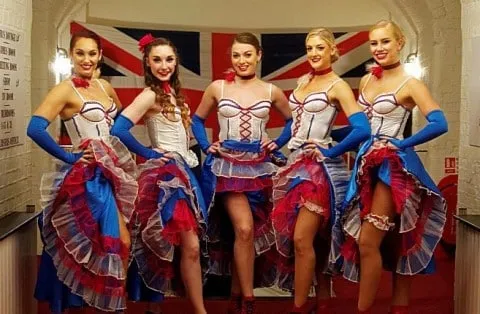
- Charleston dancers and hosts who perform short routines and teach guests a few steps
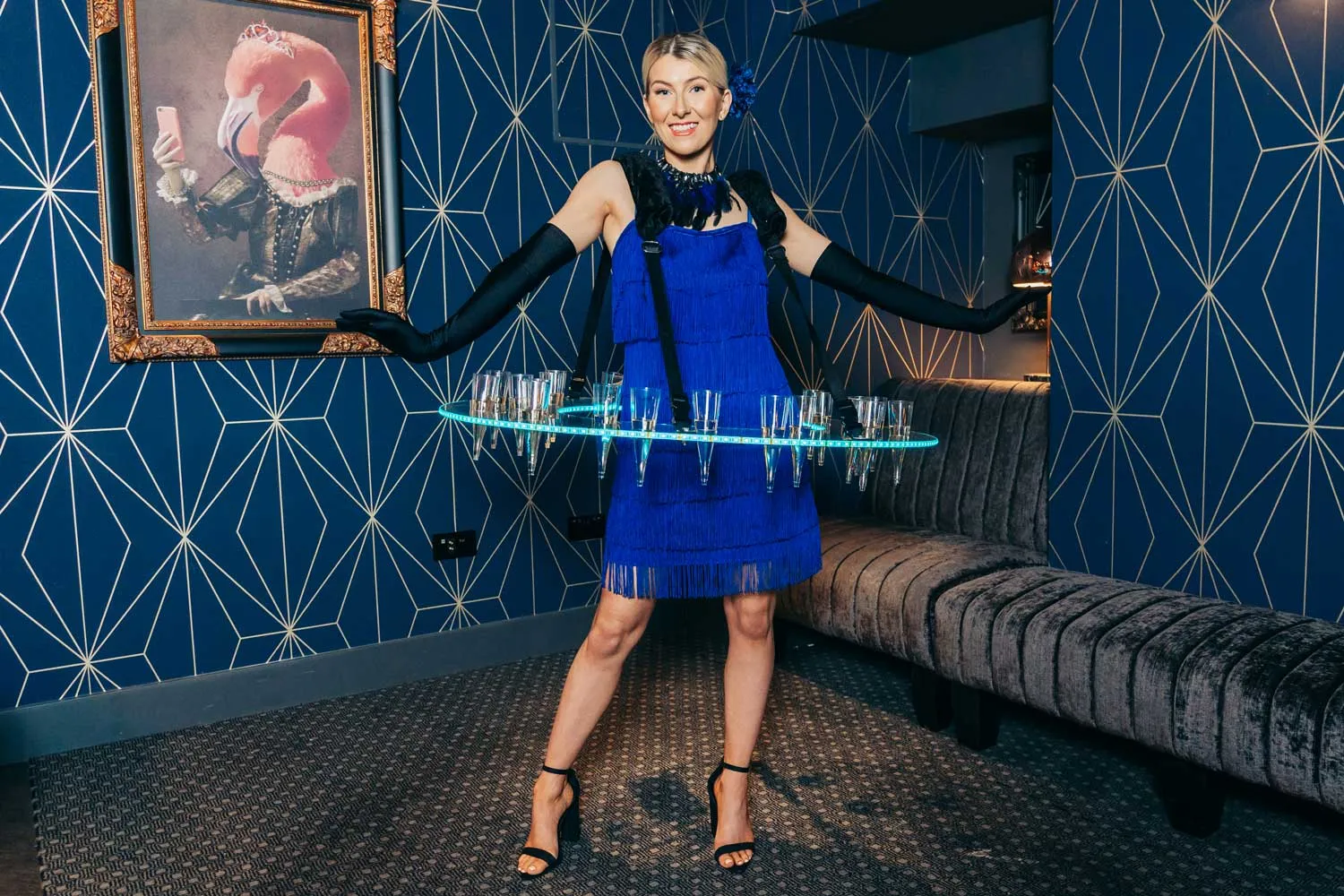
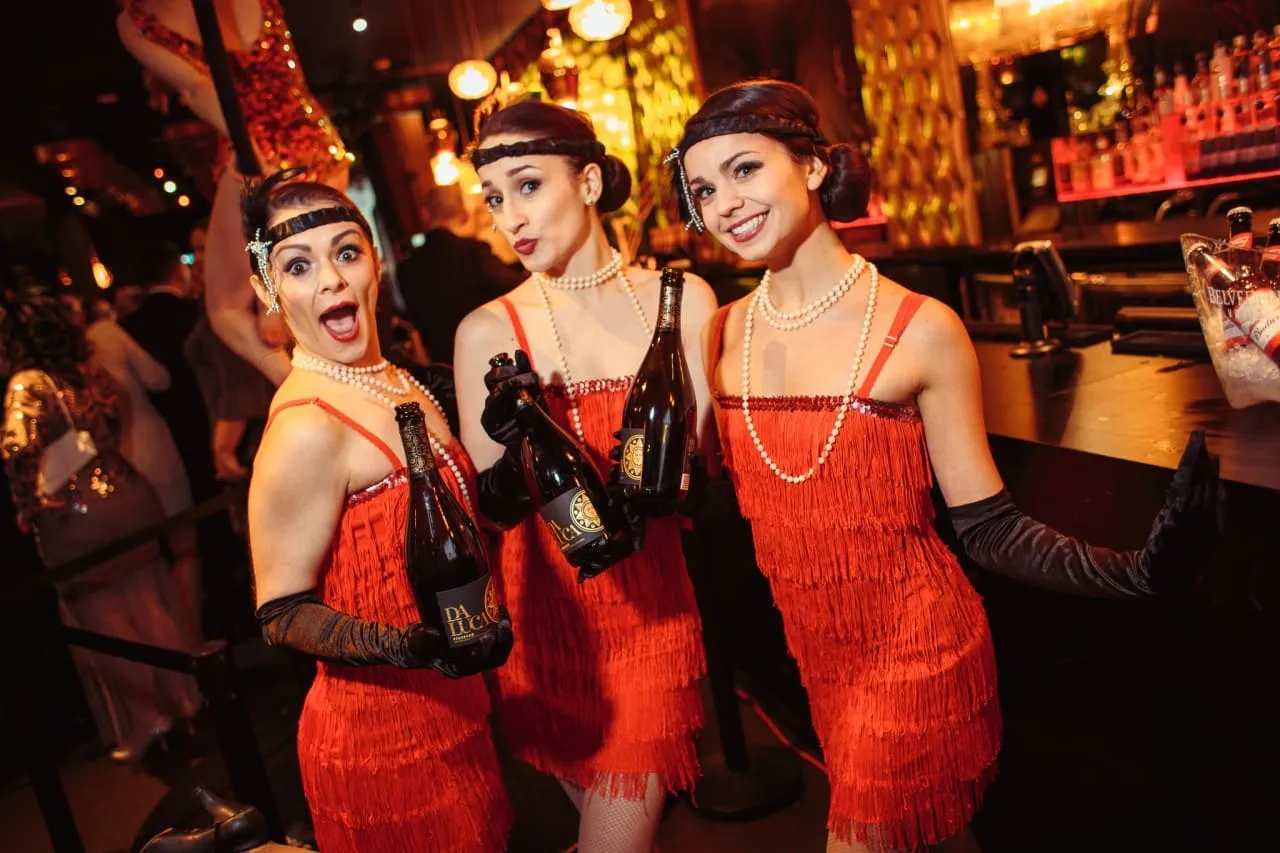
- Gangster and flapper walkabout characters who greet arrivals and play up the secret club story
- Burlesque performers for a cheeky but tasteful cabaret moment
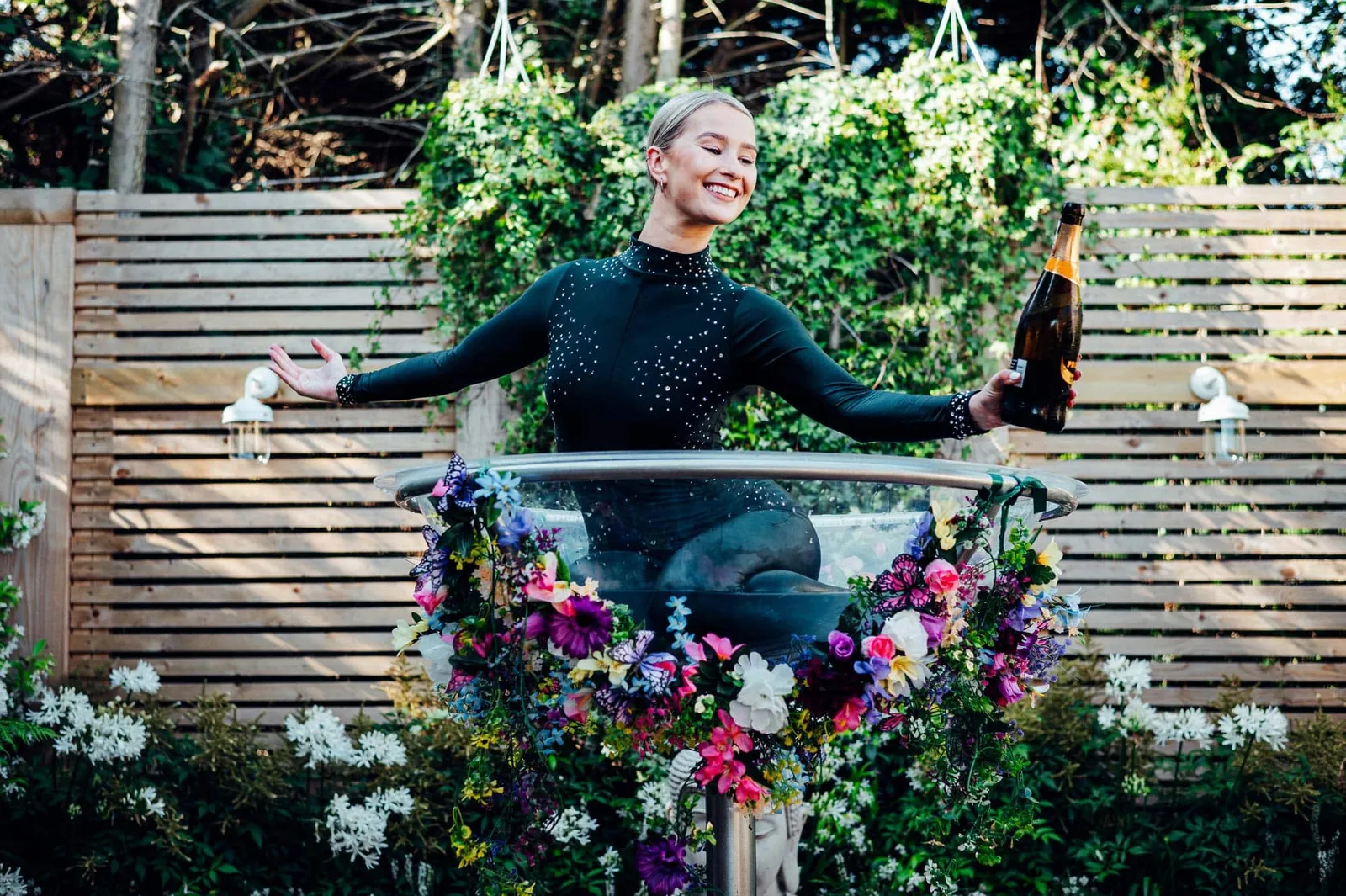
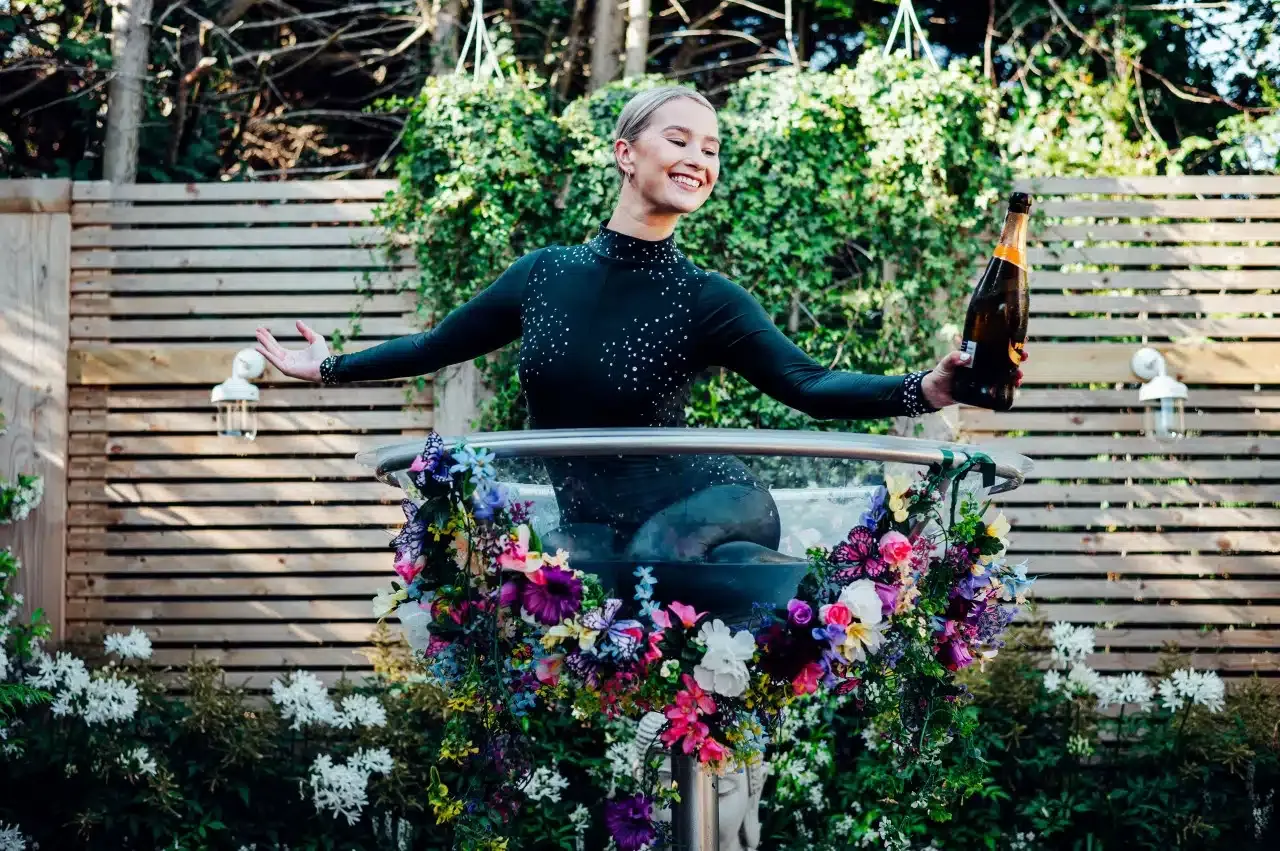
- Aerial performers pouring champagne from above the bar
- Contortion or hand balancing in glitzy costume as a short dinner act
- Silhouette cutters who snip guests' profiles in black paper to take home
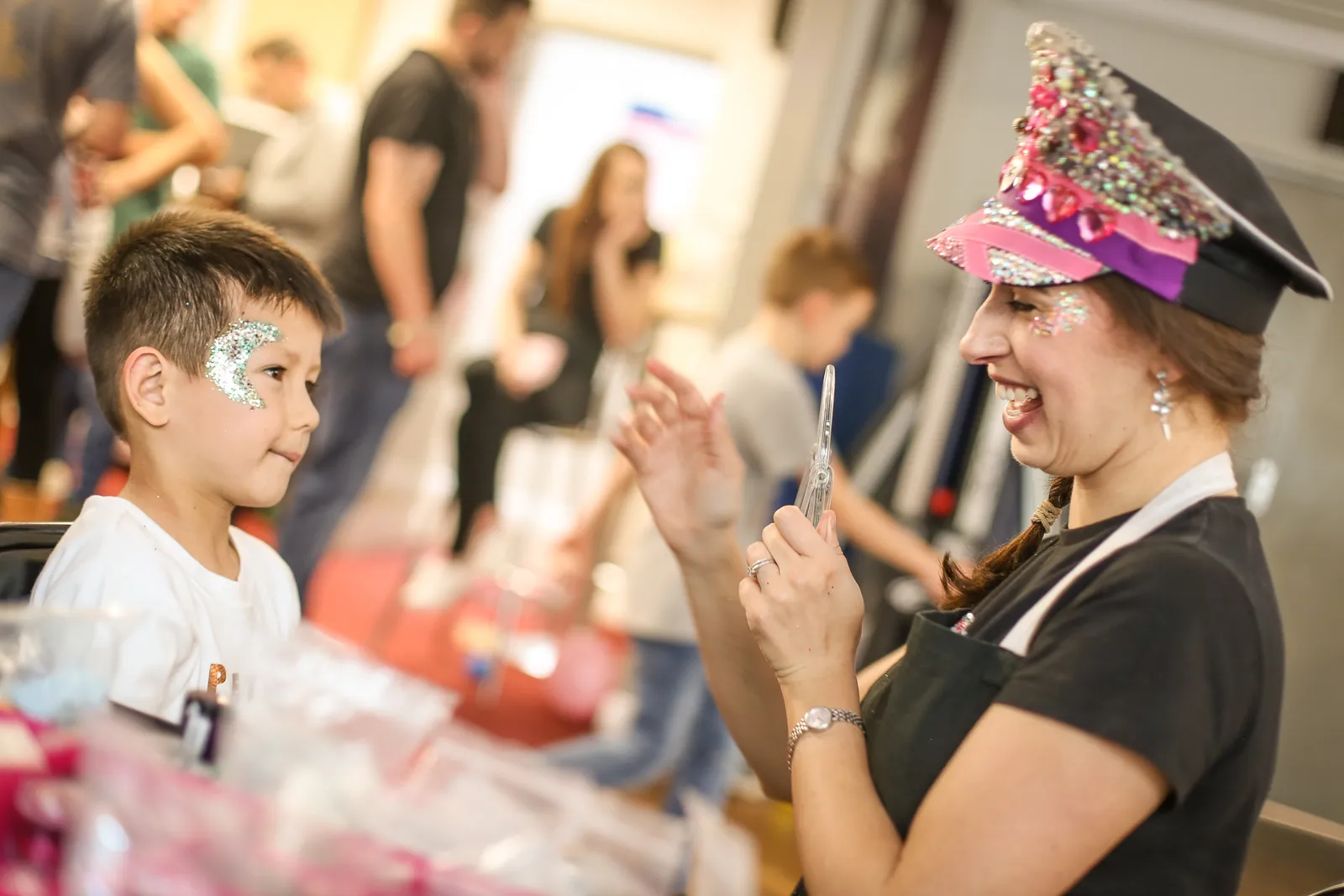
- Glitter face painters for a finishing touch of sparkle
- Close-up magicians working the tables between courses
Plan a running order that builds
A speakeasy party works best when it builds steadily through the night. Use the arrival and first drinks to establish the secret club feel with doormen, roaming characters and quiet jazz. Bring in a short showpiece act just before or between courses, such as a burlesque number or an aerial routine, to give the room a focal point. After dinner, a Charleston routine that ends with dancers pulling guests onto the floor is a natural bridge to the party.
Keep each act short and well timed. Guests at a themed party want to talk, drink and dance, and three or four short moments of spectacle across the night usually work better than one long show.
Encourage guests to dress the part
Costume makes a huge difference. Give guests plenty of notice and a few ideas: fringed dresses, pearls, headbands and feathers, or pinstripe suits, braces and flat caps. Some hosts set up a small accessories table at the door with feather boas, long gloves and bow ties for anyone who arrives underdressed. It costs little and means everyone can join in the photos.
Acts and themes in this article
Jazz Singers & Bands
Swing, jazz and roaring twenties vocals
Saxophonists
Live sax for drinks, dinner and the dance floor
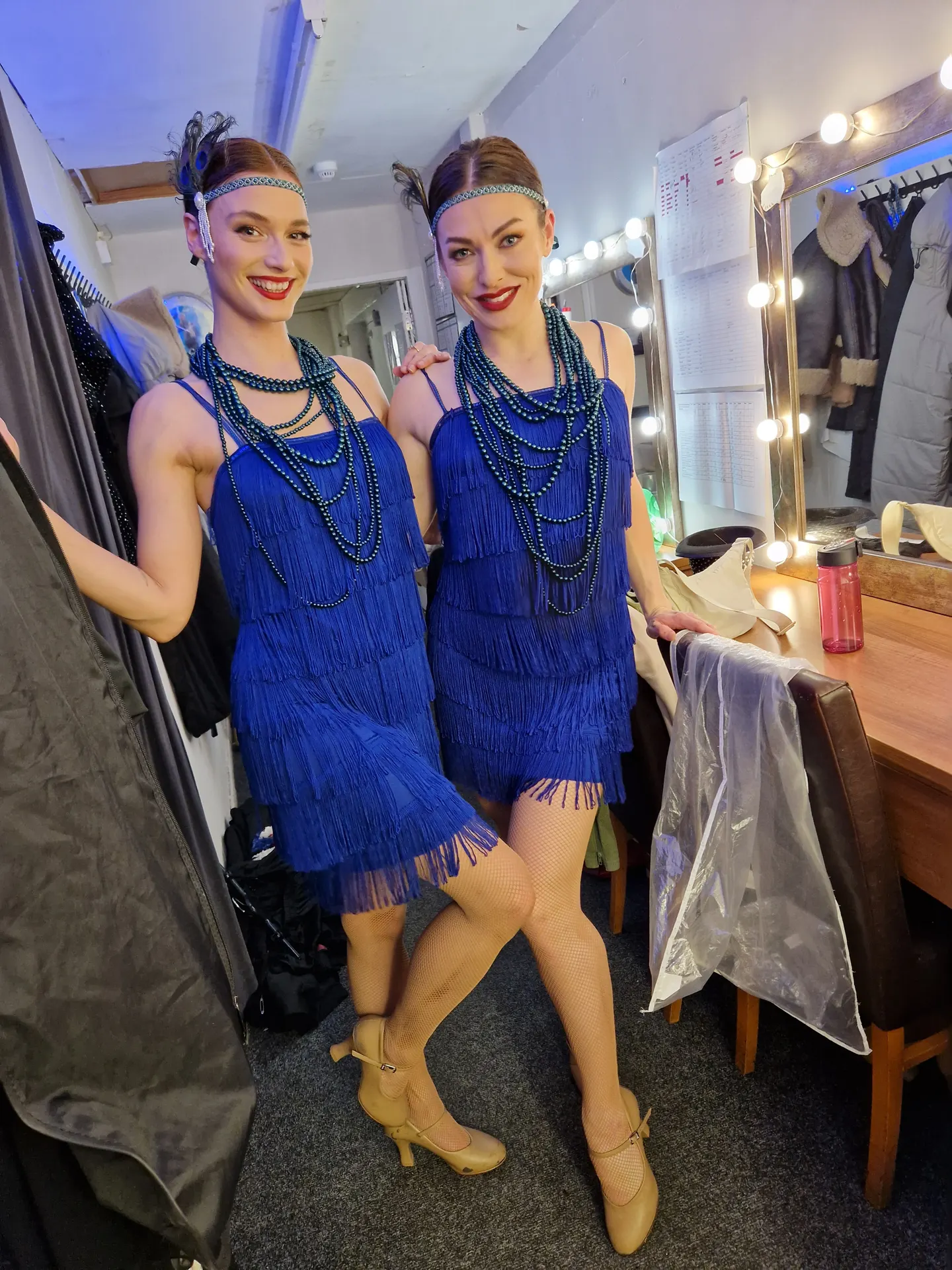
Themed Dancers
Charleston, showgirls and choreographed sets
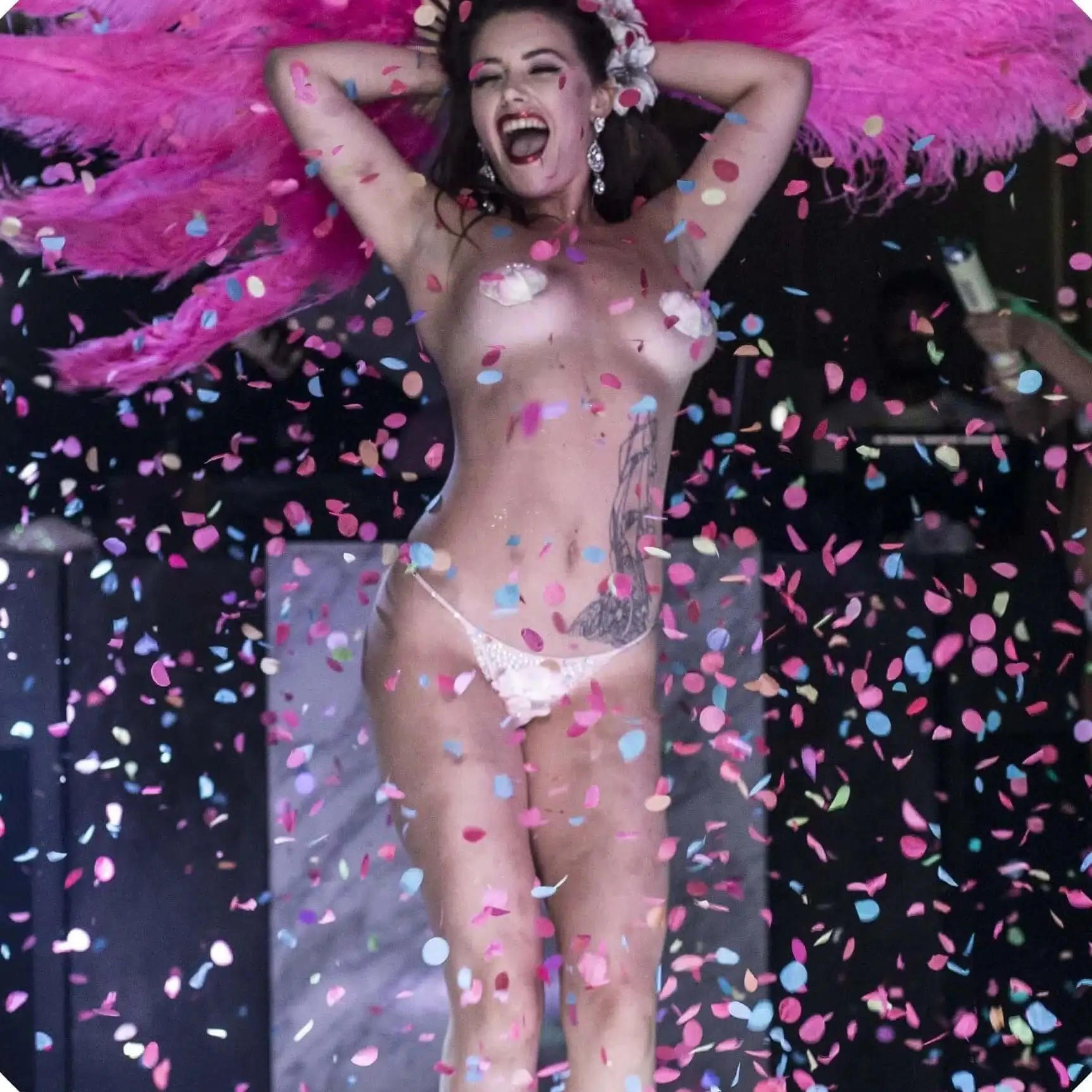
Burlesque & Cabaret
Tasteful, theatrical cabaret shows
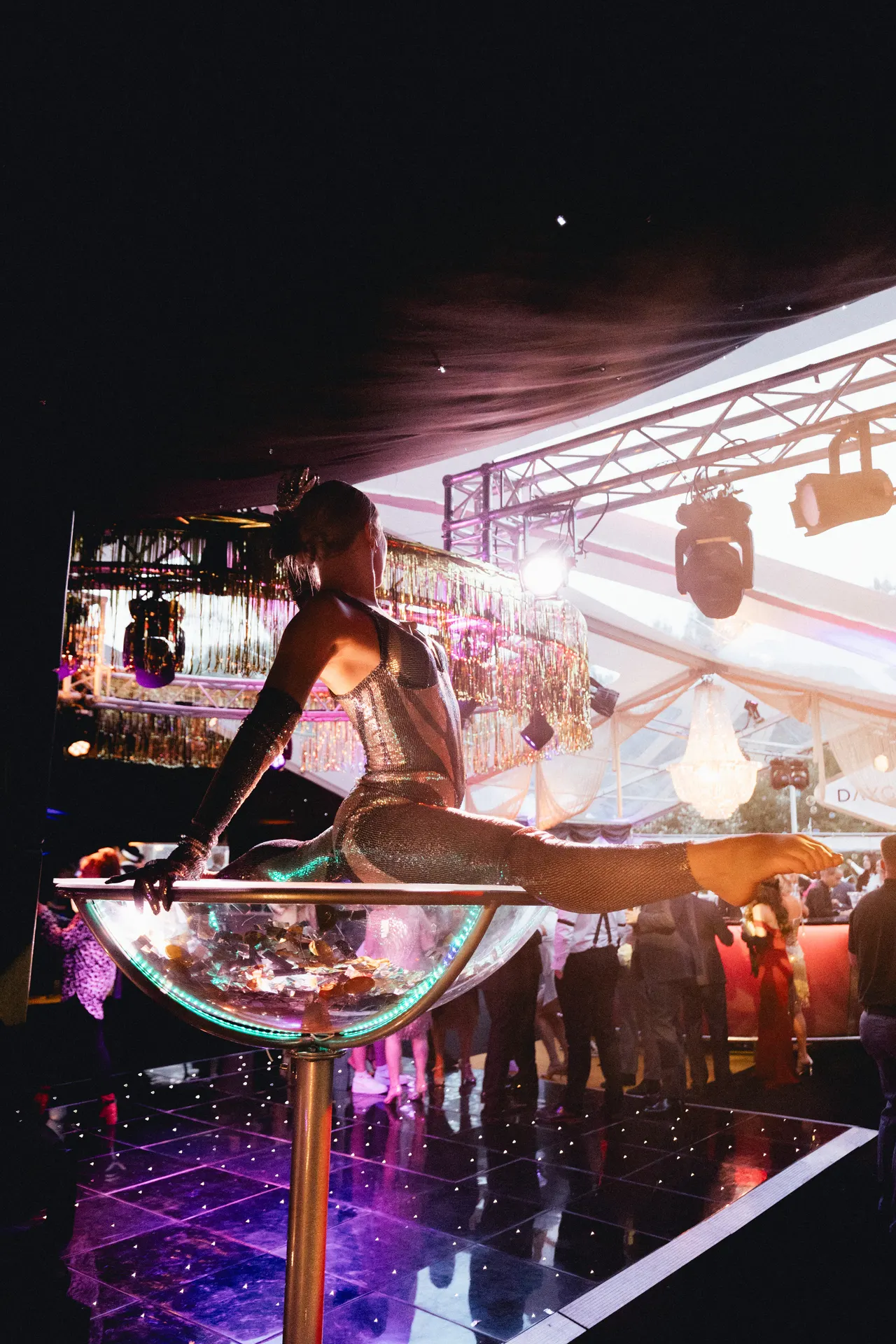
Gatsby & 1920s
Champagne, jazz and roaring twenties glamour, delivered by performers who live the look.
Frequently asked questions
What music should I book for a 1920s party?
Jazz singers, swing bands, close harmony trios and roaming saxophonists all suit the era. For a long evening, combine period music for the reception and dinner with a covers band or DJ for dancing later on.
Is burlesque appropriate for a corporate speakeasy event?
Burlesque can be pitched to suit the audience. For a corporate crowd, ask for a playful, glamorous routine and discuss costume levels in advance so the act fits your company culture.
How do I make a modern venue feel like a speakeasy?
Focus on lighting, the entrance and the bar. Warm low lighting, a hidden or guarded doorway, period furniture and staff in costume will transform most rooms without a full rebuild.
Planning a speakeasy night?
Tell us about your guests, venue and the feel you are after, and we will suggest jazz, dancers and showpiece acts that bring the secret club to life.
Written by Oliver Bradshaw, Events writer.