
Big regeneration projects open in stages. The doors go back on one part of the site while scaffolding is still up on another, and visitors arrive not quite sure what they are allowed to see. That was the situation facing a historic London exhibition venue in the middle of a vast redevelopment, as it prepared to open a new rooftop collection of restaurants and bars alongside a live music space. The answer was not signage alone. It was people: a team of brand ambassadors placed around the site to greet, guide and reassure, first at a VIP soft launch and then through the opening weeks of public trading.
Key takeaways
- At a phased opening, friendly people do more for wayfinding and first impressions than extra signs.
- A clear list of do's and don'ts, including no hard selling, keeps ambassadors helpful rather than pushy.
- Ambassadors who can feed live observations back to the marketing team turn an opening into useful research.
- Choose a supplier who can scale staffing up at short notice, because launches rarely go exactly to plan.
The setting: a landmark in the middle of a rebuild
The venue is a well known London landmark going through one of the largest regeneration schemes in the country. When finished, the site is planned to hold hotels, a theatre, a school, a gym, a large amount of new office space and a conference centre, and it expects millions of visitors a year.
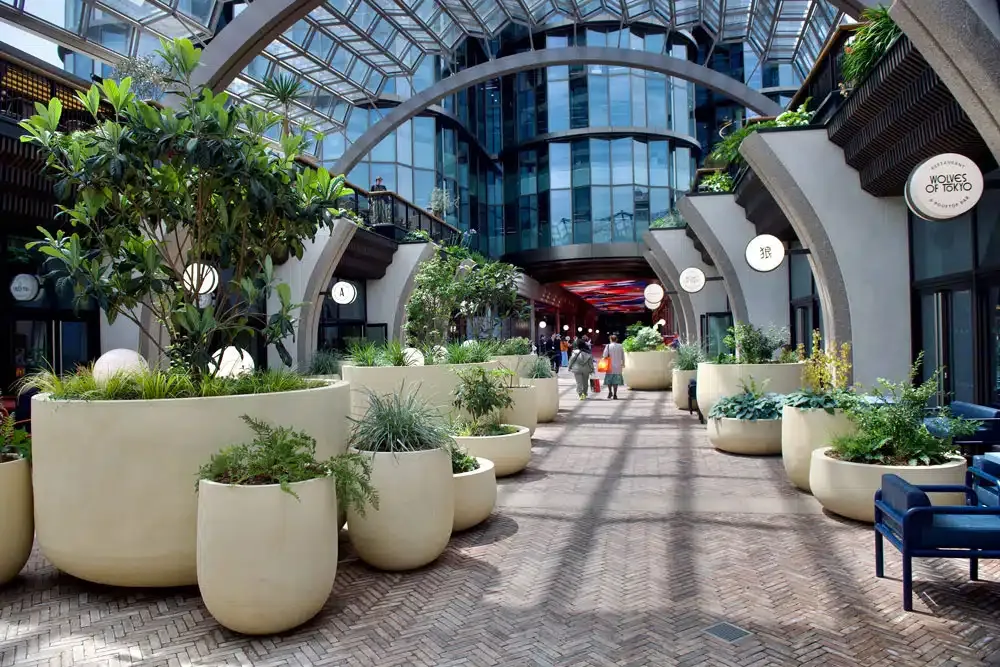
The first public-facing piece was a set of rooftop restaurants and bars, opening in the summer next to a new music venue. Plenty of the wider site was still to come, so a key part of the job was helping people understand what was open today and what would follow later.
What the brief asked for
The organisers wanted brand ambassadors stationed at key points across the site during the VIP soft launch and the first weeks of public opening. Their goals were set out in plain terms, and they make a good template for any launch team.
- Make the opening feel lively and celebratory from street level upwards
- Be the first friendly face visitors meet, with a proper welcome
- Act as human wayfinding, pointing people to the right entrances, lifts and destinations
- Explain what is open now and what is coming later in the redevelopment
- Share the day's programme, including performance times
- Encourage people to explore and stay a little longer, without any sales pressure
- Pass live observations back to the marketing team
- Help with accessibility, such as step-free routes, and reassure anyone needing extra support
The ground rules
Just as useful as the goals was the list of things the team should not do. There was to be no hard selling, no pushing leaflets into hands and no stepping in front of passers-by. The aim was to be approachable and useful, never intrusive.
The look was corporate and smart, with branded lanyards so visitors could pick out a helper at a glance. The venue also asked for a cast that reflected the varied local community, which matters when you want a new destination to feel like it belongs to its neighbourhood.
Finally, the organisers wanted the ambassadors to become more self-sufficient as the weeks went on, so venue staff would not need to manage them day to day, and they wanted a supplier who could react quickly to last-minute staffing requests.
Tip from our team: Write your ambassador brief as two lists, what good looks like and what is off limits. It removes guesswork on the day.
How it played out
The VIP soft launch went so well that the venue asked for a much larger team for the public opening week, more than tripling the number of ambassadors on the schedule. That kind of short-notice increase is exactly why the ability to scale was written into the brief at the start.
The ambassadors also became a source of information. Because they spent all day talking to visitors, they could report which routes confused people, which questions came up again and again, and which spaces were drawing a crowd. That feedback is hard to get any other way during the first days of trading.
Lessons for your own opening
You do not need a billion-pound project to use this approach. A new office, showroom, restaurant, hotel or residential scheme all benefit from the same thinking.
Start by deciding where visitors are most likely to hesitate. Entrances, lift lobbies, junctions between old and new areas and the points where a route is closed are the obvious spots. Place people there before you add more signs.
Brief your team properly. They should know opening times, the day's programme, the accessible routes, where the toilets are and a short, honest answer to the question everyone asks: what else is coming here. A one-page crib sheet that each ambassador carries is cheap and very effective.
Build in a way to gather what they hear. A five-minute debrief at the end of each shift, or a shared message group, turns casual chats with visitors into practical notes for the marketing and operations teams.
Lastly, agree a dress code that matches the brand. Smart corporate clothing with lanyards suits a business-led destination. A more playful launch might use themed costume or hosts with a bit of character, and that is where hosts and hostesses or walkabout performers can add colour without losing the helpful role.
Acts and themes in this article

Frequently asked questions
What is the difference between a brand ambassador and a host or hostess?
The roles overlap. Brand ambassadors usually focus on welcoming, guiding and informing visitors, often across a large site and over several days. Hosts and hostesses tend to be booked for a single event, greeting guests, handing out drinks or managing a photo spot, and can be styled to fit a theme.
How many ambassadors does a launch need?
Count the decision points on the visitor route, such as entrances, lifts and junctions, and aim for at least one person at each busy point, with a few floating. Then agree with your supplier how quickly they can add people if footfall is higher than expected.
Should brand ambassadors hand out flyers?
Only if that is the main goal. For a launch where first impressions and wayfinding matter most, many venues ban leafleting so the team comes across as helpful hosts rather than sales staff.
Planning a launch or opening?
Tell us about your site, your dates and the impression you want to make, and we will suggest hosts, ambassadors or arrival acts to match.
Written by Hannah Whitfield, Events writer.