Few audiences are harder to impress than events professionals. When an industry awards ceremony in December chose a winter wonderland theme, the entertainment had to win over a room full of people who see performers every week. The venue, a conference and events space in central London, was turned into a theatrical winter scene with careful lighting and understated decor. The brief was to add moments of wonder at each stage of the evening without distracting from the awards themselves. Here is how the line-up was put together, and what other event planners can take from it.
Key takeaways
- Give each part of the evening its own act so the theme develops rather than repeating.
- A single, brand-new or unusual stage act can hold even an experienced audience if it is timed well.
- Interactive walkabout acts on the dance floor keep the theme alive after the formal part ends.
Arrival: statues made of ice
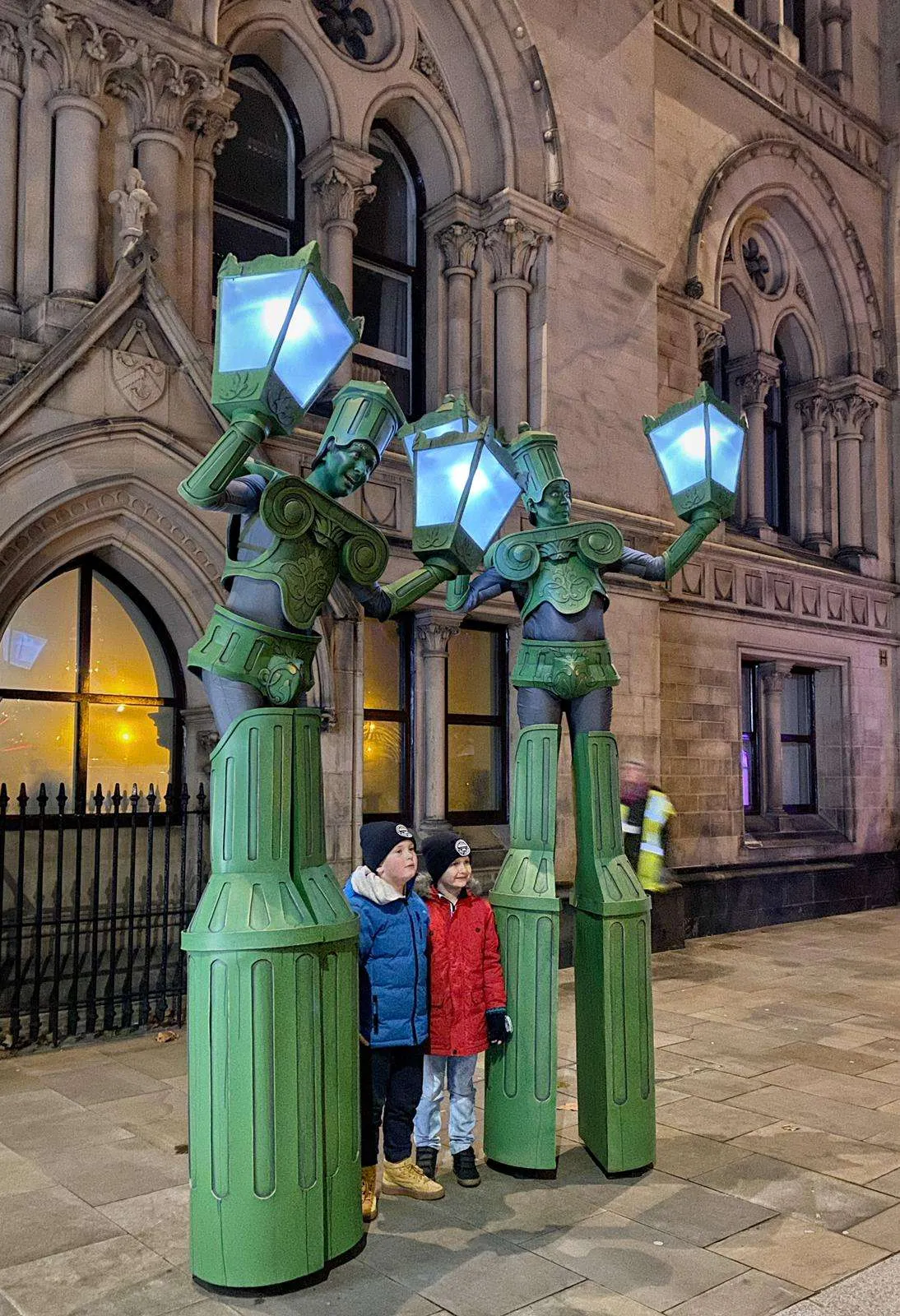
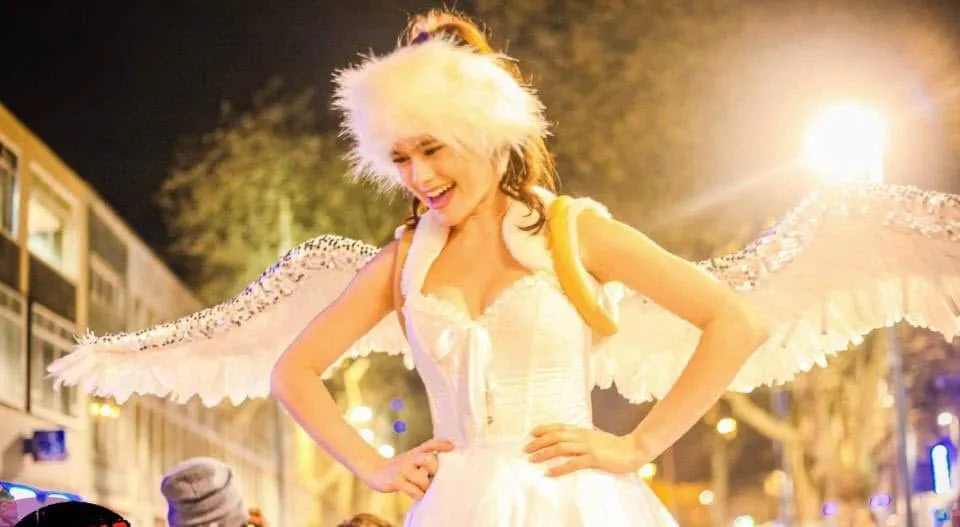
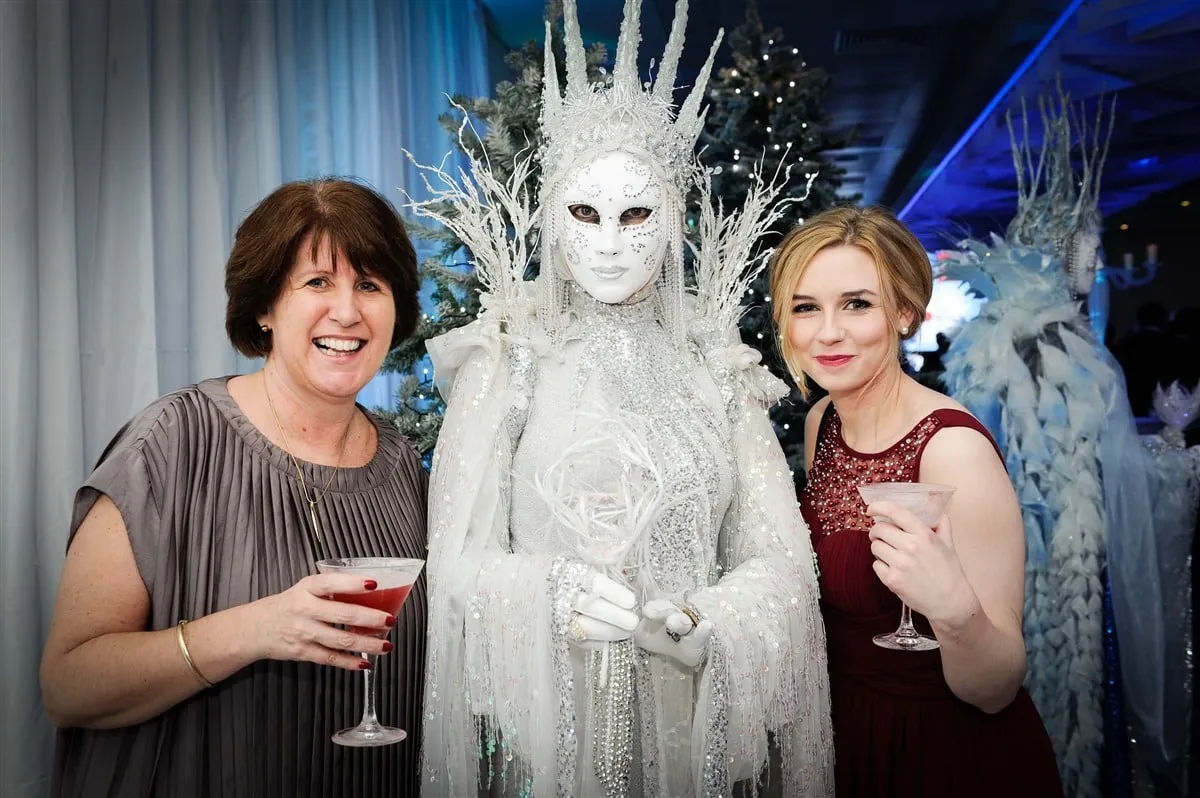
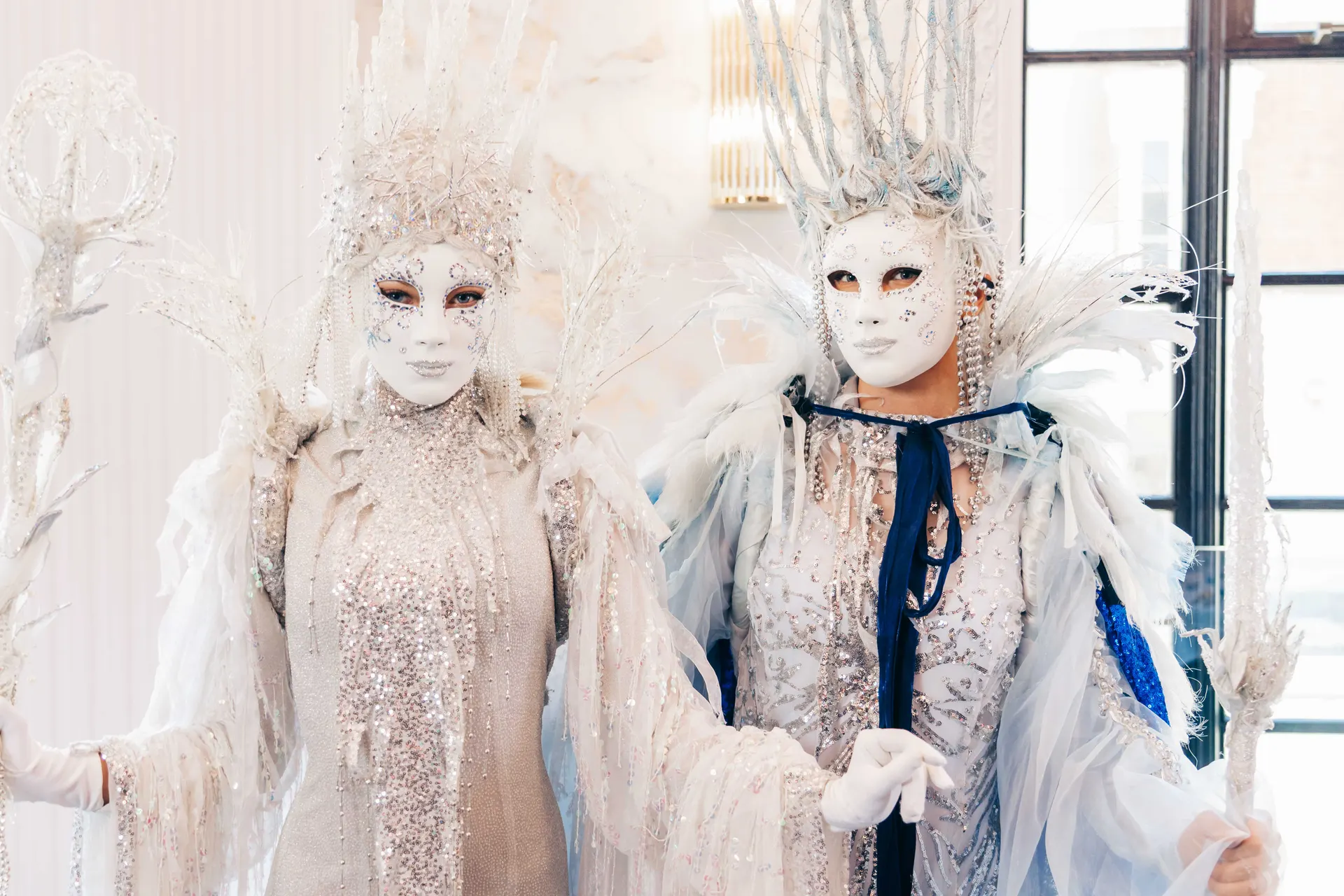
As guests reached the drinks reception, they were met by roaming ice statues. These performers, costumed and painted in frosted whites and pale blues, moved slowly through the crowd, pausing to pose for photographs. The effect was of figures from a frozen palace who had wandered into the party.
This kind of welcome does two jobs. It tells guests straight away what the theme is, and it gives them something to photograph and talk about before they have found the people they know. For an industry crowd, many of whom arrive alone or in small groups, that early icebreaker matters.
The centrepiece: a frosted martini glass
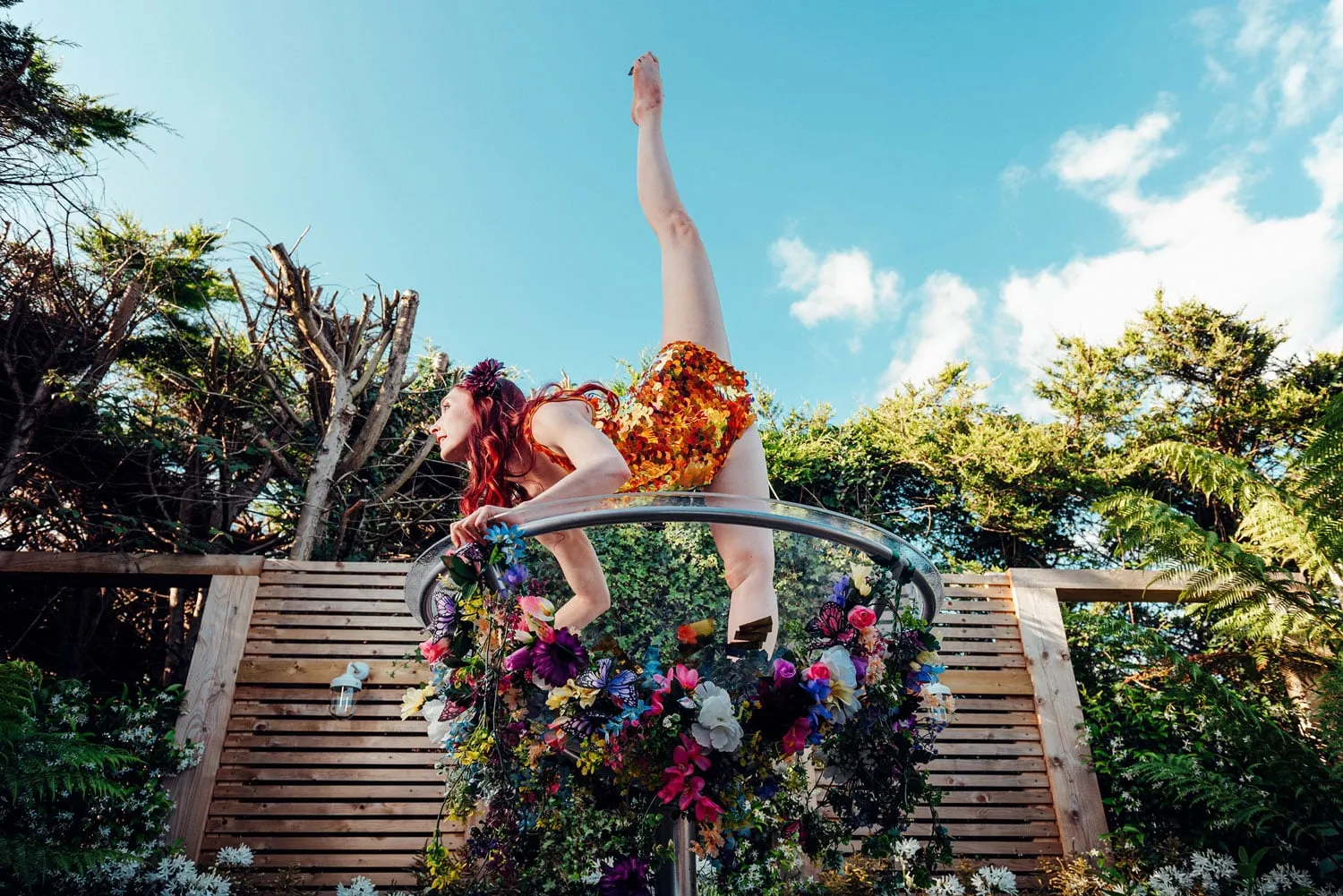
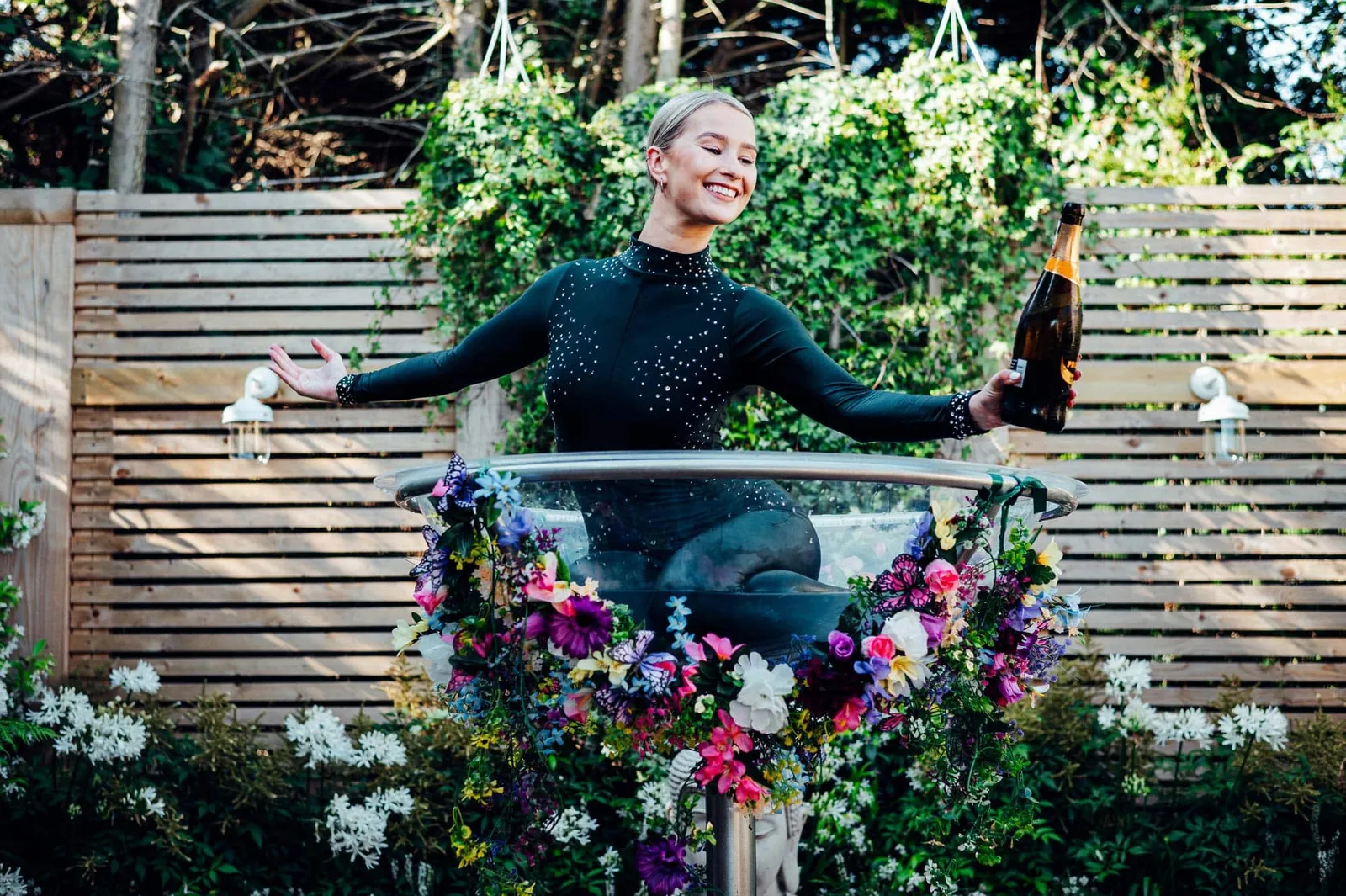
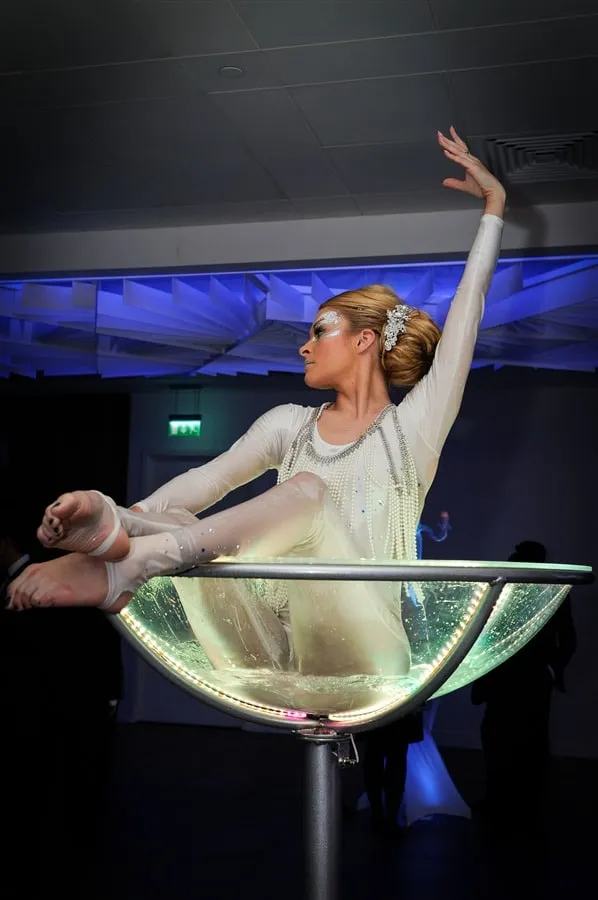
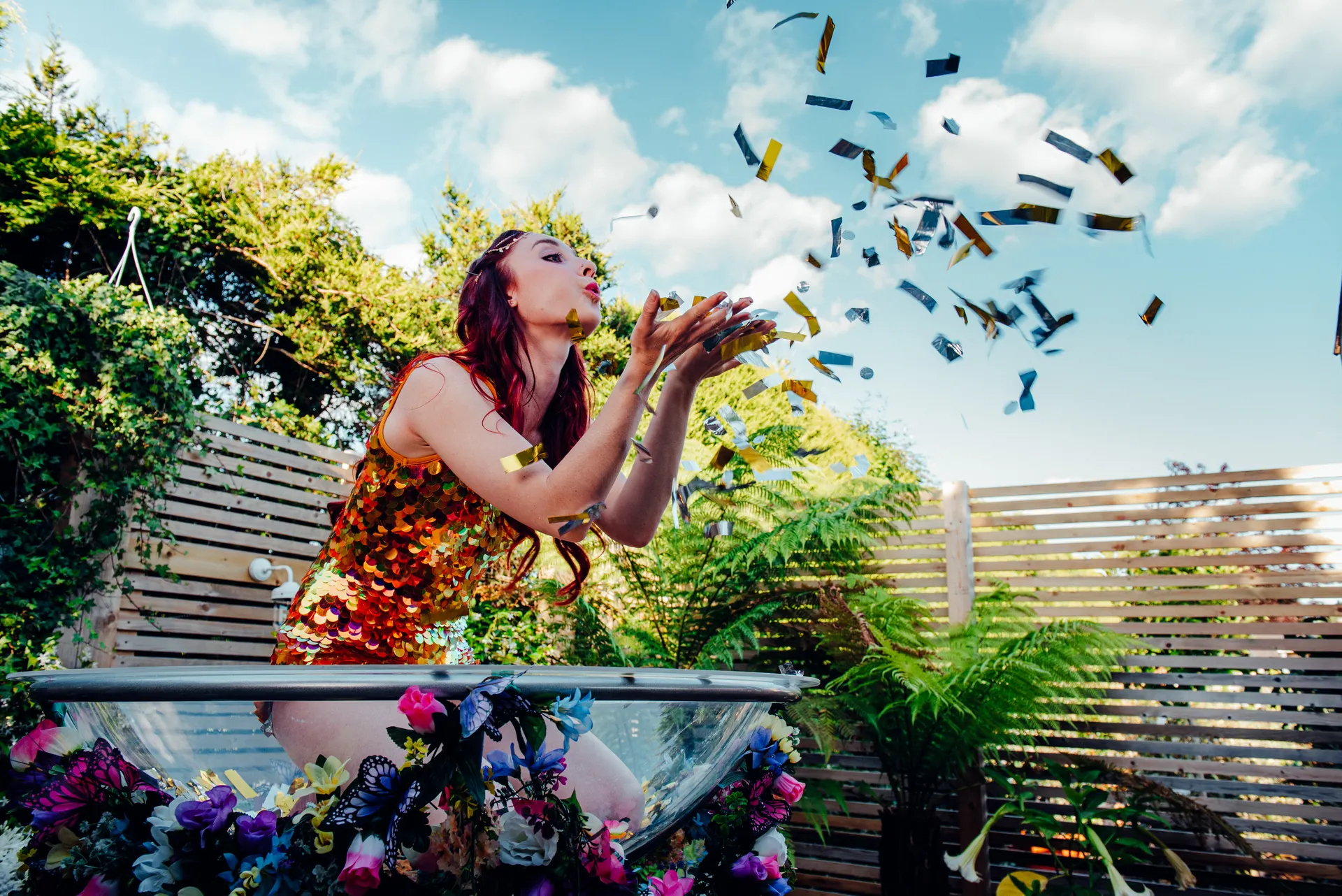
Across the reception, a giant martini glass prop dressed with frosted ivy and lit from within drew the eye. Inside it, a classical dancer performed a slow, graceful routine. Unlike a roaming act, a centrepiece like this gives the room a focal point and works well in photographs taken from across the space.
Dressing the prop to match the theme is what makes it feel part of the event rather than a stock act. The same glass can be decorated with flowers for a summer garden party or with gold for a 1920s night.
Tip from our team: Place a centrepiece act where it can be seen from the main entrance and the bar, so guests notice it as they arrive and gather around it later.
After dinner: a feat of precision
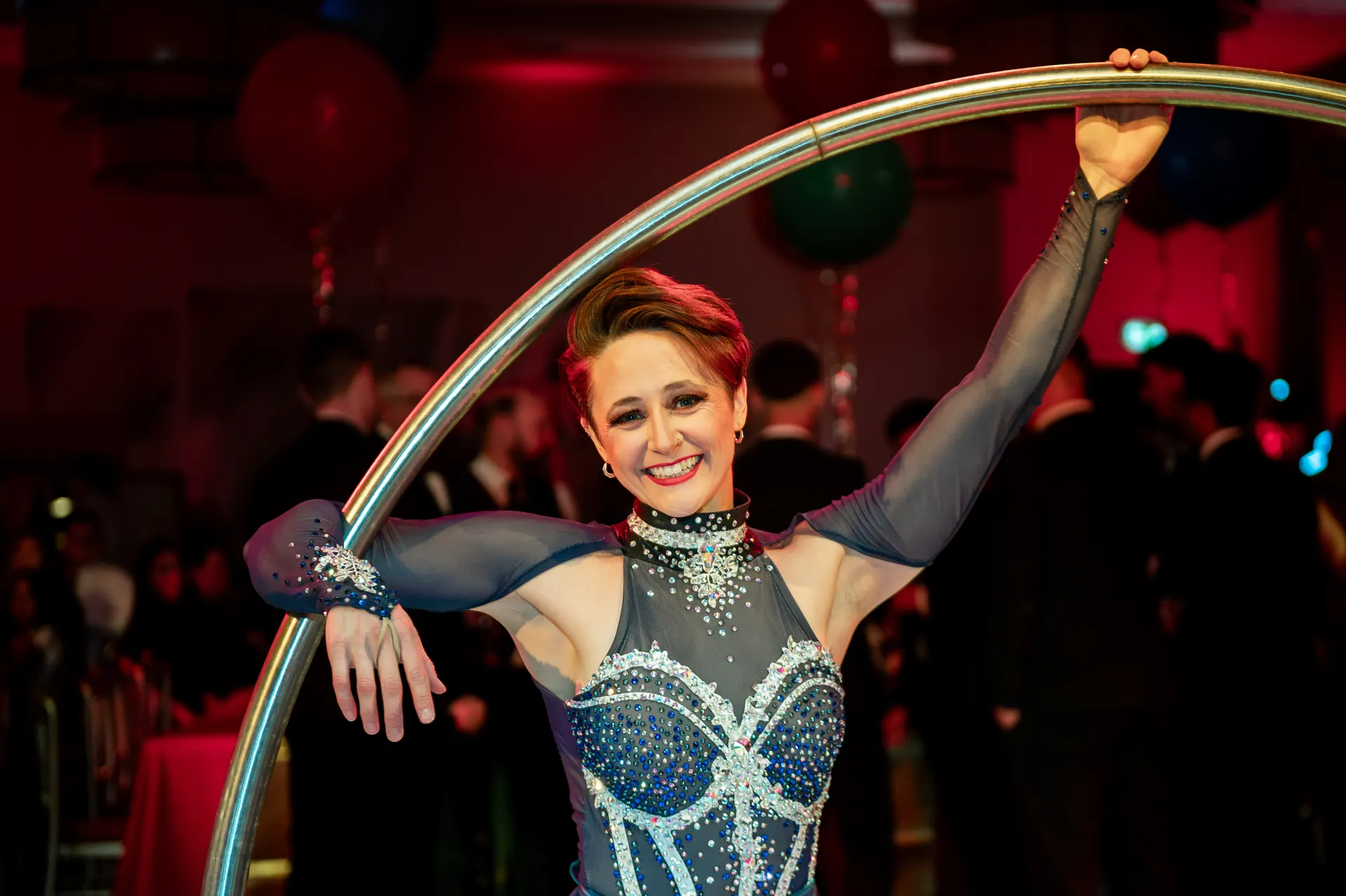
Once guests had taken their seats and enjoyed a served dinner, the main stage act began. The performer was a contortionist who shoots a bow and arrow with her feet while balanced on her hands, a rare skill that few people in the room had seen before.
What made the moment work was the way it built. Conversation at the tables faded gradually as more people turned to watch, until the whole room was willing her on to hit each target. She finished to loud applause, and plenty of guests shared photos and comments online afterwards. For an audience that had seen most acts before, novelty and genuine skill made the difference.
The party: a clockwork doll on the dance floor
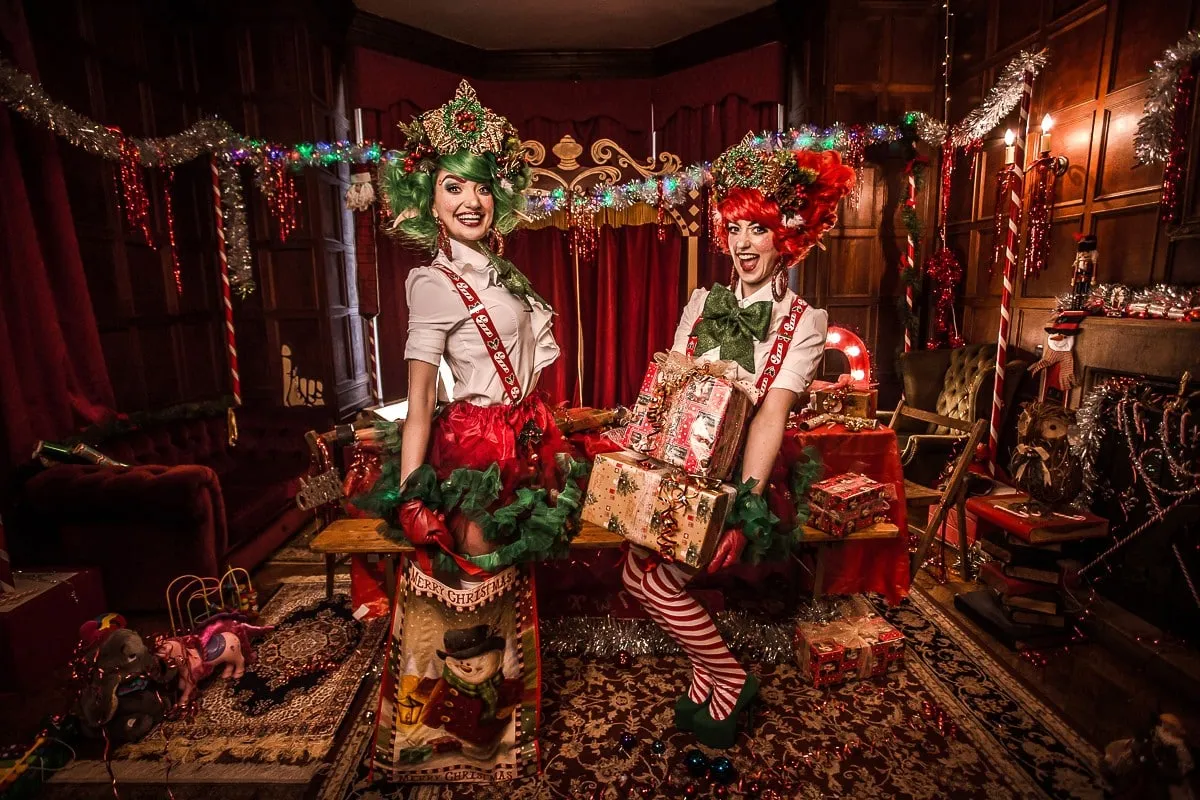
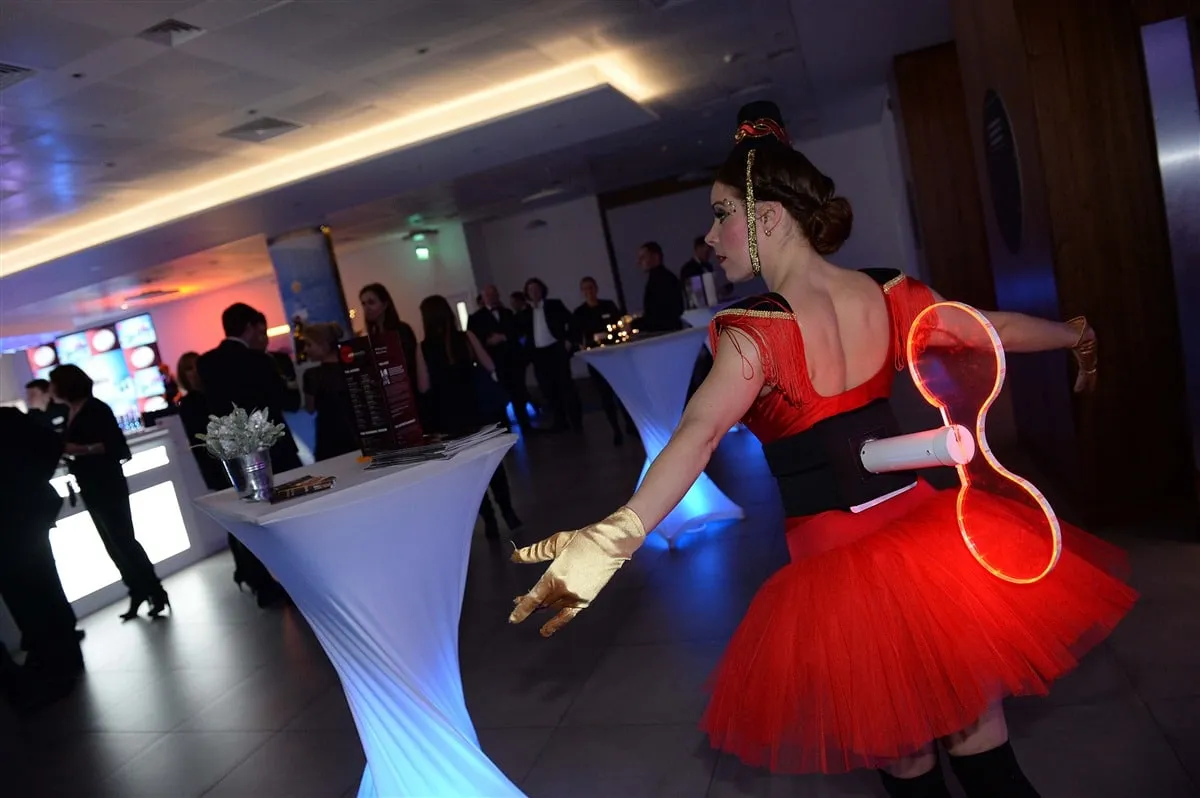
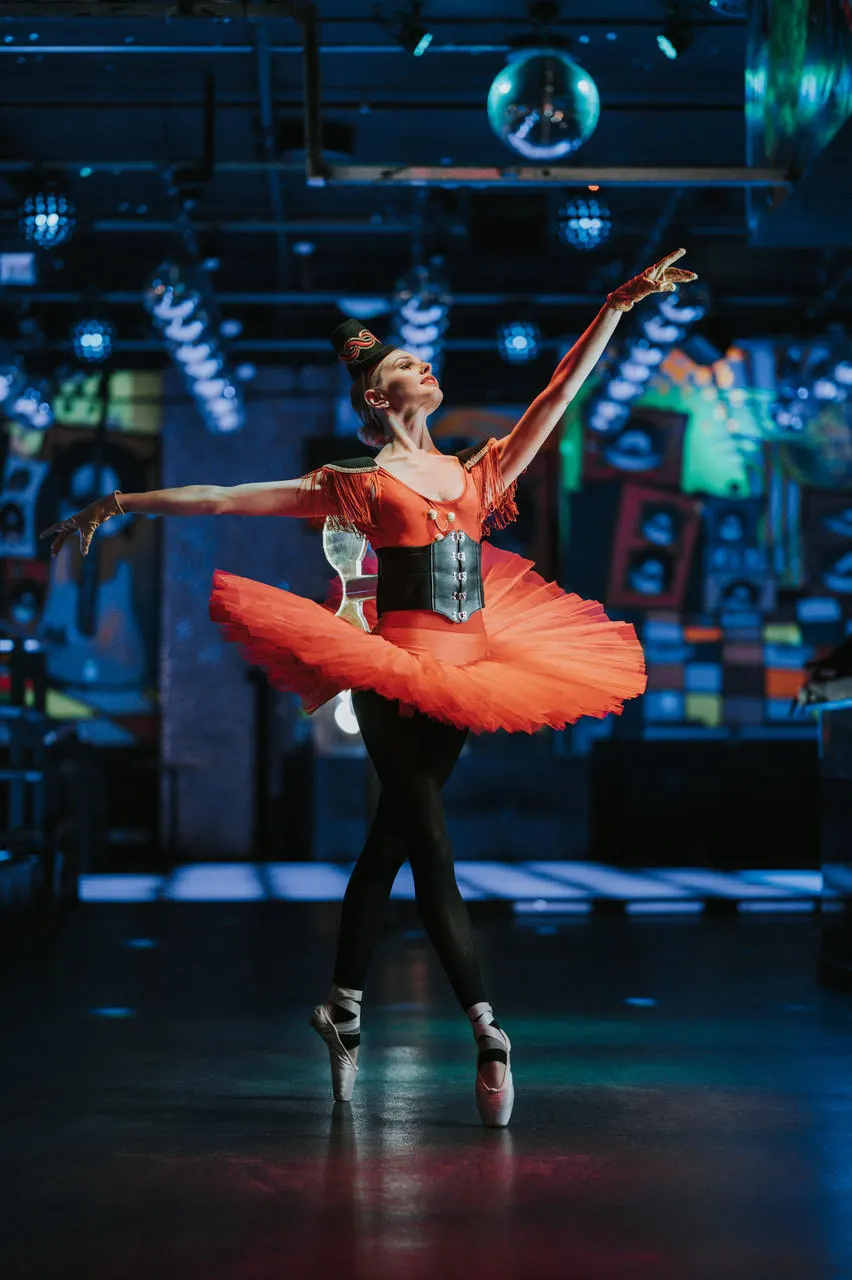
After dessert, guests moved through to a bar area set up as an alpine scene, with a photo area and a box of props and accessories for group pictures. On the dance floor, a clockwork nutcracker doll danced on pointe among the guests.
The clever part was the interaction. Every so often she would freeze mid-step as if her mechanism had run down. Guests quickly learned to turn the light-up wind-up key on her back, and she would spring back into motion. It is a simple idea that gets people of all ages laughing and joining in, and it keeps the theme going long after the formal part of the night is over.
What planners can take from this event
The line-up worked because each act had a clear job. The statues welcomed, the martini glass gave the reception a centre, the stage act created a shared moment during the formal part, and the clockwork doll carried the theme into the party. None of them competed with the awards.
If you are planning a winter awards evening, a similar structure is a good starting point:
- A roaming welcome act that introduces the theme and encourages photos
- A static centrepiece in the reception space
- One short, high-skill act timed between dinner and the awards or just after
- An interactive walkabout character for the bar and dance floor
- A themed photo area with props so guests can make their own fun
Acts and themes in this article
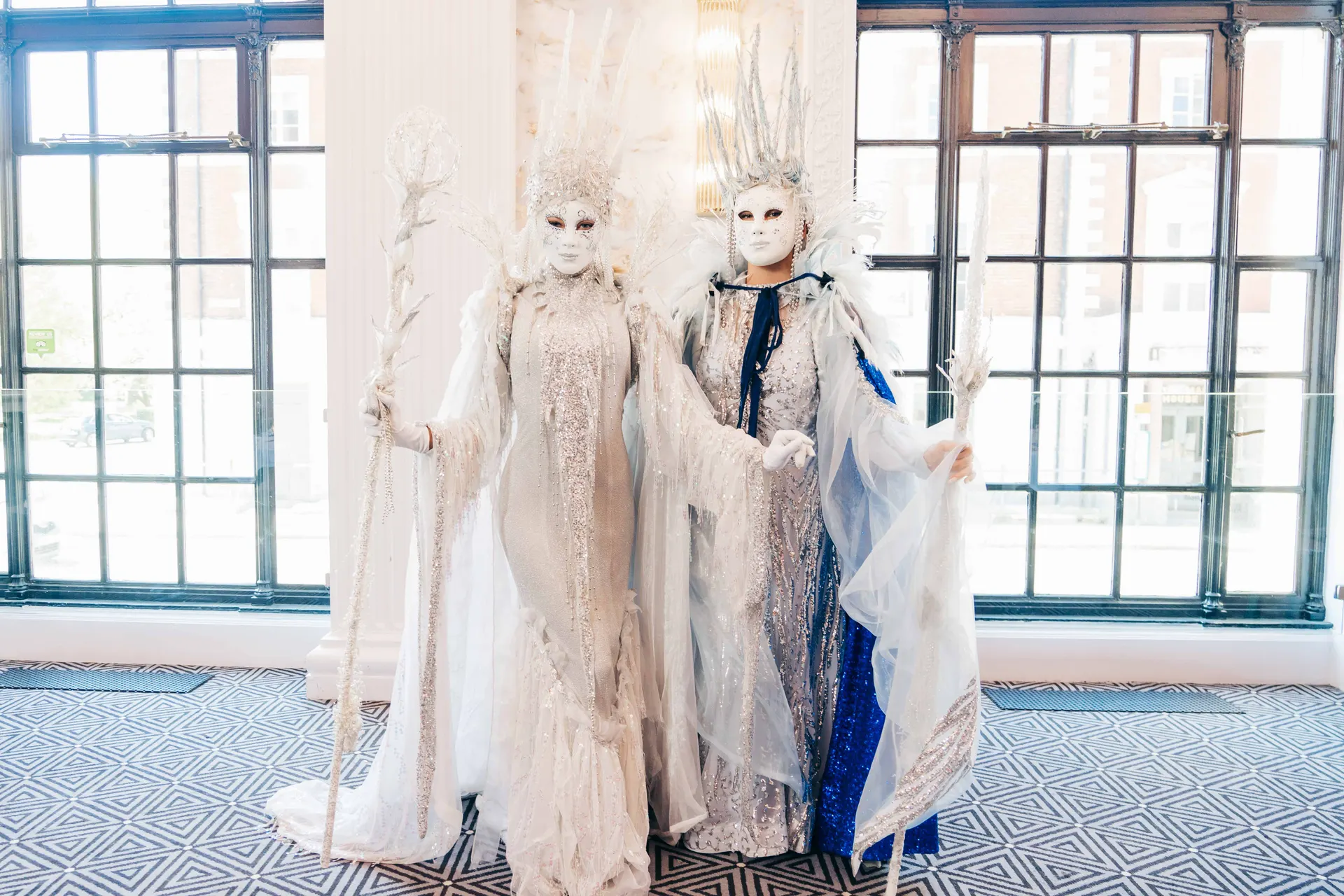
Living Statues
Still, silent and stunning, until they move
Giant Martini Glass Show
A performer, a giant glass and a lot of glamour
Circus Acts
Ringmasters, contortion and big-top spectacle
Walkabout Characters
Pirates, nutcrackers, sea creatures and more
Winter Wonderland
Ice queens, frozen statues and glowing performers for an elegant winter event.
Christmas Parties
Nutcrackers, festive statues and glowing acts for a Christmas party people talk about in January.
Frequently asked questions
When is the best time for a stage act at an awards dinner?
Usually after the main course and before the awards begin, when guests are settled and attentive. Keep it short, around five to ten minutes, so it lifts the room without delaying the ceremony.
Do giant martini glass acts need special staging?
They need a flat, stable floor area, access for the prop and usually a power point for lighting. Share your floor plan with the entertainment team so they can suggest the best spot.
What winter acts work well for a corporate audience?
Ice statues, champagne walkers, aerial performers in white costumes, a frosted martini glass and interactive characters like a clockwork doll all suit a corporate winter theme without feeling childish.
Planning a winter awards evening?
Share your venue, running order and guest numbers, and we will suggest a winter line-up with a clear role for each part of the night.
Written by Charlotte Pemberton, Events writer.