Few acts stop a crowd like fire. A short, well-choreographed routine with a big flame finale gives any outdoor event a moment that everyone watches together, and it suits garden parties, weddings and summer corporate events equally well. Because flames are involved, a little more planning is needed than for most entertainment. None of it is complicated, and getting it right means the performers can concentrate on the show.
Key takeaways
- A tight routine of a few minutes, with a big finish, often has more impact than a long set.
- Time the show for dusk and agree a clear performance area with the performers.
- Check venue rules and the performers' insurance and risk assessment early.
What a fire show involves
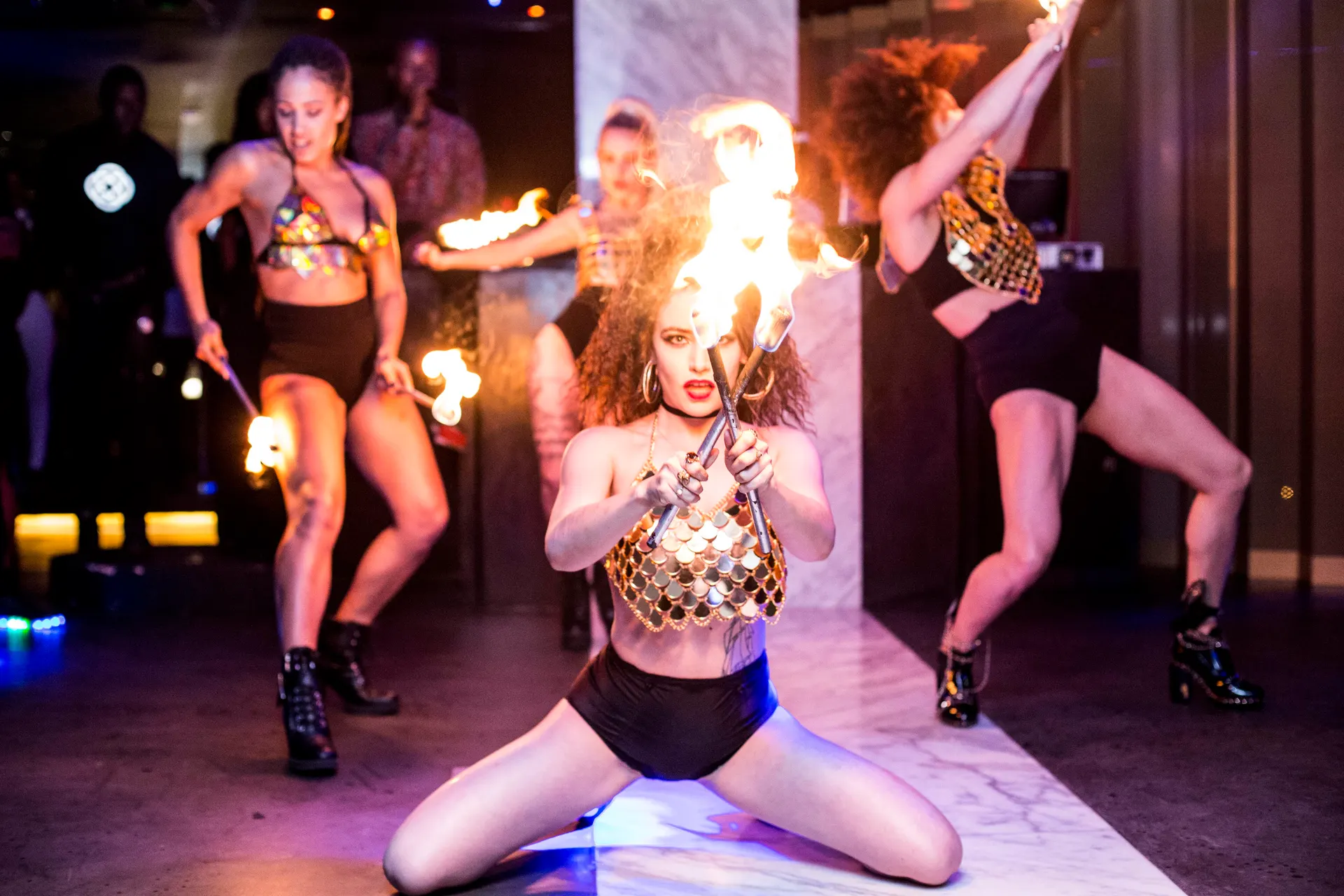
Modern fire shows are choreographed dance pieces as much as displays of skill. A typical feature routine runs for around six minutes and moves through a range of props, such as fire fans, poi, staffs and hoops, building to a large flame burst at the end. Group shows with several dancers performing in sync look particularly striking.
Many fire acts also offer walkabout or ambient fire for arrivals, plus a feature show later. Ask what formats are available, as a combination often gives the best value.
Get the timing right
Fire looks at its best against a dark or darkening sky. In midsummer that can mean waiting until well after nine o'clock, which is later than many people expect. Check sunset times for your date and build the running order around them.
Think about where guests will be at that moment. Just after dinner, before the dance floor opens, is a natural slot because people are together and ready for something to watch. Announce it a few minutes beforehand so nobody misses it.
Tip from our team: If your event finishes before dark, ask about LED or light-up props instead. They work in daylight-to-dusk conditions and indoors too.
Space and safety
The performers will need a clear, level area with nothing flammable nearby: no overhanging branches, gazebos, bunting or decorations. Guests should be kept back at a safe distance, which the performers will specify for their particular routine.
Professional fire artists bring their own safety equipment and a safety person to watch the performance area. They should also have public liability insurance and a risk assessment ready to send to your venue. Ask for these when you book, not the week before.
- Confirm with your venue that fire performance is allowed and whether any permits are required
- Share a site plan so performers can pick the best spot
- Agree how guests will be kept back, for example with a rope line or a clear marked area
- Keep the performance area free of drinks and glassware
Weather
One of the big advantages of fire shows is that they can go ahead in most summer weather. Light drizzle is rarely a problem for experienced performers. Strong wind is the main concern, because it affects how flames behave, so performers may adjust their routine or position on the night. Trust their judgement if they need to make changes.
Sound and light
Most fire routines are set to music, so check whether the performers bring their own speaker or need to plug into your DJ or band's system. Keep surrounding lighting low during the show so the flames stand out, and agree with your photographer where they can stand to get the best shots safely.
Pairing a fire show with other acts
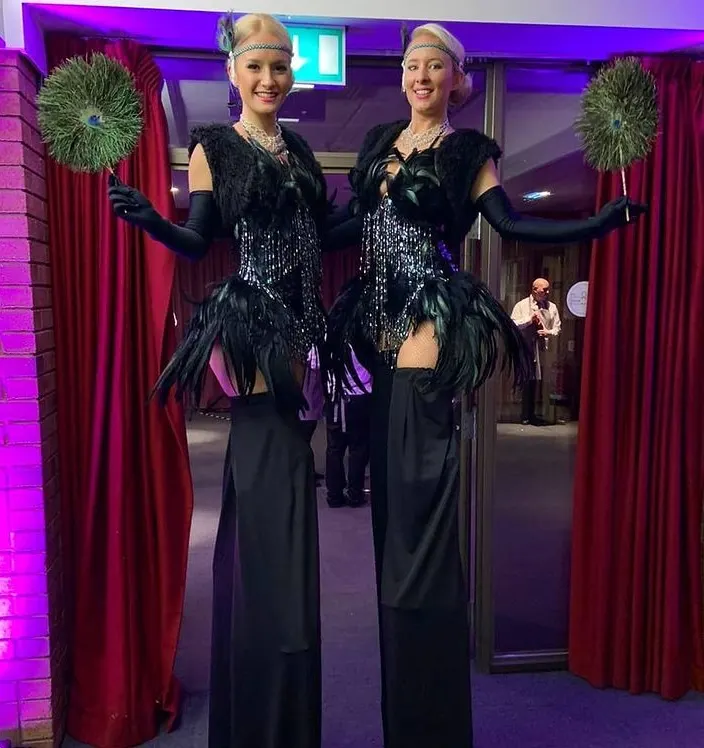
A fire feature works well as the climax of an evening that builds gradually. Stilt walkers or themed dancers can welcome guests in daylight, a saxophonist or band can carry the dinner, and fire can mark the switch from dining to dancing. For weddings, it makes a dramatic send-off for the couple or a lead-in to the first dance.
Questions to ask before you book
A short conversation with the performers or your booker will cover most of what you need to know.
- How long is the feature routine, and is there a walkabout option too?
- How much clear space do you need, and what surface can you perform on?
- Can you send your insurance details and risk assessment for the venue?
- Do you bring your own music and speaker?
- What happens if the venue or weather rules out fire on the night?
Acts and themes in this article

Frequently asked questions
How long is a fire show?
Feature routines are usually short, often around six minutes, because that keeps the energy high. Many performers can also provide ambient fire walkabout for longer periods.
Can a fire show go ahead in the rain?
Usually, in light rain. Strong wind is more of an issue. Experienced performers will assess conditions on the night and adapt where needed.
What paperwork does a venue usually need?
Most venues ask for the performers' public liability insurance and a risk assessment. Some also need advance permission for any open flame, so check early.
Want fire at your summer event?
Send us your date, venue and timings and we will suggest fire acts that suit the space, plus LED options if flames are not allowed.
Written by James Ashworth, Events writer.